
From hedgerow to hearth
Grooming
Brushes, shampoos and de-shedding tools that make the after-walk clean-up quick, calm and unfussy.
Grooming is not vanity work. Matted fur pulls at the skin, traps damp and hides problems until they become veterinary ones — and in a British winter, a coat that never fully dries is the normal state of affairs, not the exception.
Pick the tool for the coat
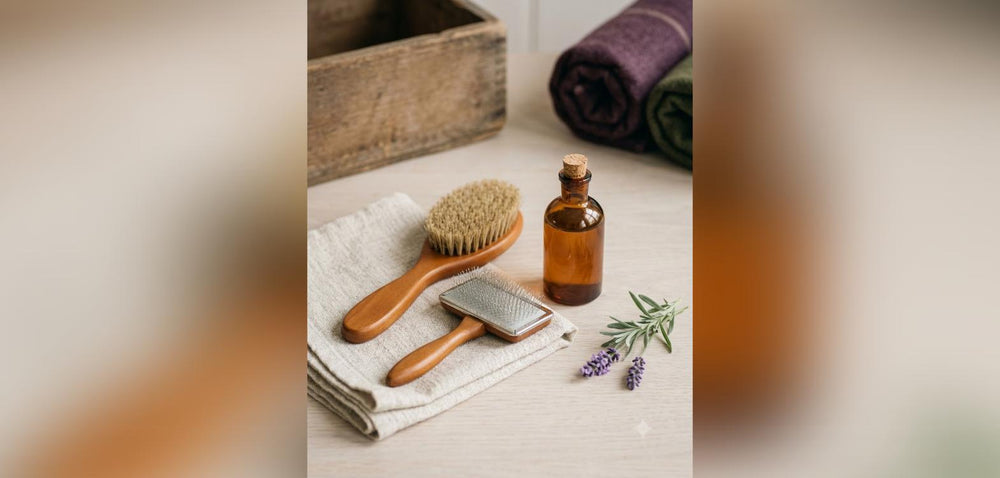
- Slicker brushes for medium and long coats — fine bent wires that lift out the loose undercoat before it felts.
- Pin and palm brushes for everyday smoothing, and for dogs who dislike being groomed. Less bite, more tolerable.
- Dematting combs and knot cutters for coats that have already gone past brushing — spaniels, doodles, long-haired cats.
- Nail clippers for the job most owners avoid. Nails that click on a hard floor are already too long and change how the dog stands.
How often
Short coats need a weekly brush; long or double coats need something closer to daily through spring and autumn moult. Ten minutes regularly beats an hour once a month, and it costs far less than a de-matting session at a groomer.
After a wet walk
Dry before you brush, and brush before the mud sets — both save considerable work. A drying robe handles the first part while you get your own boots off.